AirwarsThe civilian harm watchdog
Annual Report
2024/25
12conflicts monitored
3rapid response teams mobilised
25,000open source claims archived
6awards and nominations for investigative journalism
1new tool for policy change
200civilian harm incidents cited across legal, policy and media
Foreword
The fight for accountability denied
This last year has forced us to confront a new reality, where every conflict we document is part of an ever more chaotic international landscape, and where we are facing a major erosion of our shared understandings of truth, human rights, and the rule of law.
While today these challenges are at the forefront of all the work we do, they are in many ways the inevitable conclusion of decades of unchecked military power - where democratic and progressive institutions have consistently failed to protect the most vulnerable.
The strength of our response now, and the way we will build strength for the future, relies upon our ability to bolster the collective: we must look beyond the confines of any one organisation to raise up the individuals, connections and trust that create collective power. Airwars acts as a crucial connector in this effort. By advancing the two-way flow of information and expertise through productive collaborative relationships, we build bridges between those harmed in conflict and those with the power to forge a different future.
Our teams are experts from some of the world’s most deadly conflict zones, and have honed techniques to share and amplify the truth - even when everything else has been upended. This year we have not wavered on that commitment. We have documented war’s most complex and intense events; from double-tap strikes, to hospital sieges, to the levelling of residential homes and neighbourhoods. We have investigated those responsible, winning awards for turning military propaganda into vital evidence of harm. And we have pushed for change more boldly and at higher levels than ever before - confronting those perpetuating harm and working in tandem to shift policies and establish a new set of norms for the wars of the future.
This resilient yet adaptive model has enabled us to find ways to continue pushing forward. We have responded quickly to external shocks and opportunities, while remaining strategic and methodical in our approach. And we have seen a growing recognition that what we do, and the way we operate, can still cut through in a world where other avenues are reaching dead ends.
Looking ahead, we cannot let surrounding and compounding crises distract us from the fact that leaders and militaries don't decide whether they are accountable for their actions. Accountability belongs to all of us. And when accountability is actively denied, the fight for it is needed most.
Emily Tripp, Executive Director
Casualty Recording
New challenges for justice and accountability
This year our conflict documentation teams tackled significant escalations in civilian harm head-on. While maintaining commitments in ongoing wars, we responded swiftly to new campaigns as they emerged, adapting to the changing global landscape by:
- Investing in agile teams to respond to new crises. we strengthened our rapid response muscle to leverage our networks to identify talent, seek funding from trusted donors and conduct analysis of information gaps to ensure impact and reach. This included bringing on new language experts and researchers as the Israel-Iran war erupted, and investing in specialists on open source maritime documentation as we investigated attacks at sea for the first time.
- Building a longer term model for Gaza documentation. by the time of the declared ceasefire in Gaza in October 2025, we had identified more than 15,000 incidents of civilian harm to research. That is almost double the number of civilian harm incidents we documented in a decade of all foreign intervention in Syria. Over the last twelve months we have built a new system, using advanced archival technologies and approaches to fast-track and preserve sources to meet the unprecedented scale of this war. This includes new methods to identify patterns in real-time to inform the focus and flow of our documentation teams, and building tools for others to interrogate vital but inaccessible information such as the official Palestinian list of victims.
- Delivering reliable information in the face of rampant distrust online: at a time of increasingly intense wars over narrative and truth, we continued to produce careful and comprehensive analysis through a new and more accessible interface for our casualty archive. This allows deeper interrogation of our underlying sources and an enhanced ability to ‘show our working’ for all findings. Over the last year we have seen how effective this approach has been, with our documentation featured in almost all major international media outlets, discussed in Congress, shared in detail by online voices with large audiences, and featured in more than ten languages including Hebrew, Arabic, French, Spanish, and Indonesian.
Gaza: as the conflict shifts and international attention wanes
In the second year of Israel's war in Gaza, we found new ways to cut through contested narratives and push forward the stories of civilians.
At the end of 2024 we produced a comparative assessment of deadly urban campaigns, placing the opening weeks of the war on Gaza in the wider context of ten years of Airwars documentation. Our findings were stark:
- almost as many children killed in three weeks as in the deadliest year of documentation in other contexts
- more incidents of harm with families being killed together in a single strike
- more civilians dying on average in each incident
We shared this directly with governments across Europe and the US, we presented at a UK tribunal on British government complicity in war crimes, and we secured coverage across major media channels.
Our report was read in U.S. Congress by Representative Jim McGovern, who described our data as “detailed, exacting [and] thorough” and used it to argue that sustained arms support to Israel contravened U.S.law. In February our findings were cited by South Africa in its public dossier of evidence to the UN Security Council in the case against Israel for committing acts of genocide.
In the weeks leading up to the ceasefire in October 2025, many of those same patterns identified still held true: children have consistently borne the brunt of the war, residential homes have remained under attack, and even during a period of relative calm we continued to document high levels of harm per strike. Ongoing work to understand both the scale and specifics is essential to build the fullest possible picture around intent, decision-making and review processes.
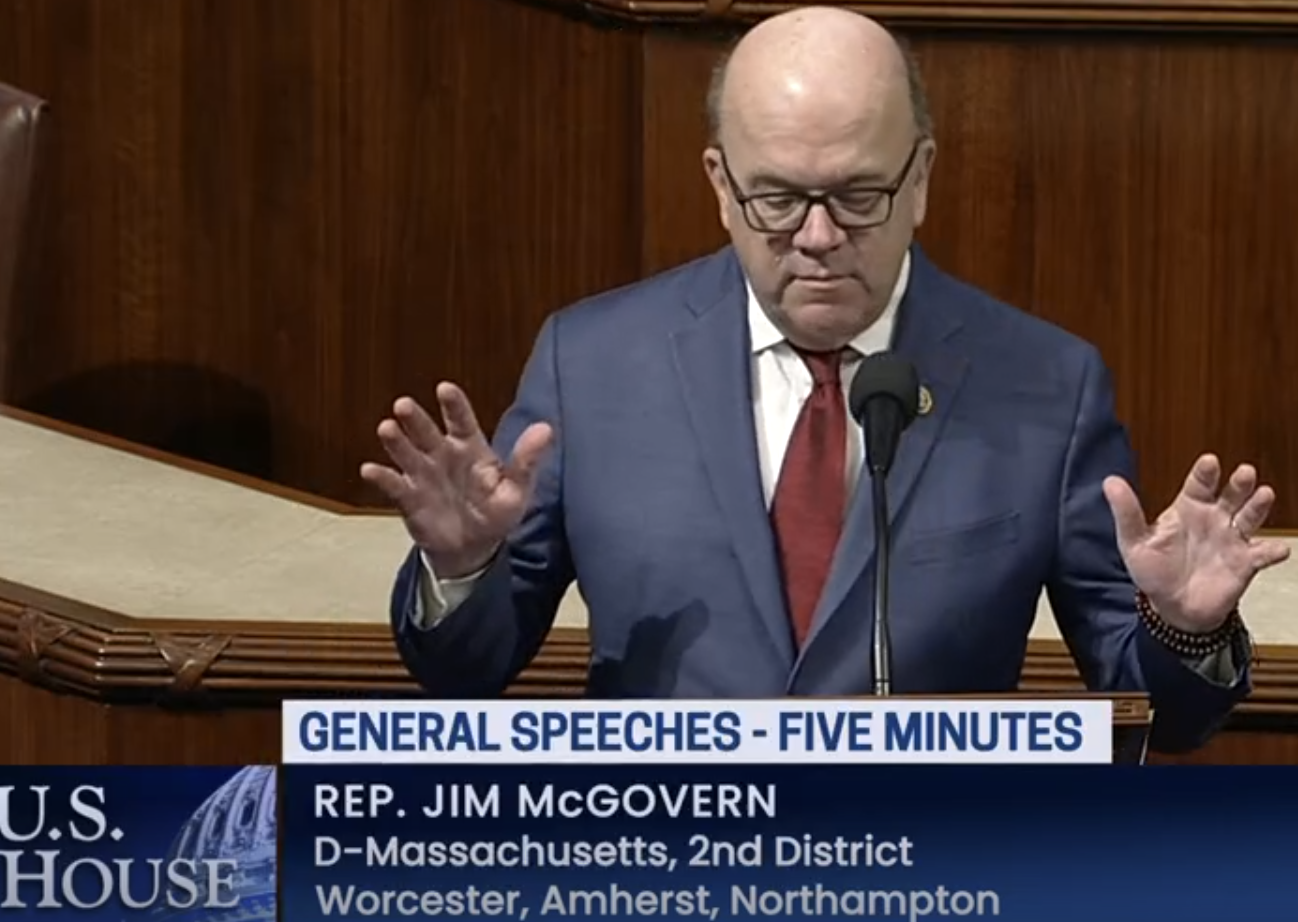
U.S. Representative Jim McGovern highlighting Airwars’ report in Congress
Rapid response for civilians under fire
Due to capacity, we had to make difficult decisions on which conflicts to monitor. Our focus this year remained on civilian harm by the United States and allies where - despite major shifts in the international landscape - there were still opportunities to drive change immediately and for future conflict response.
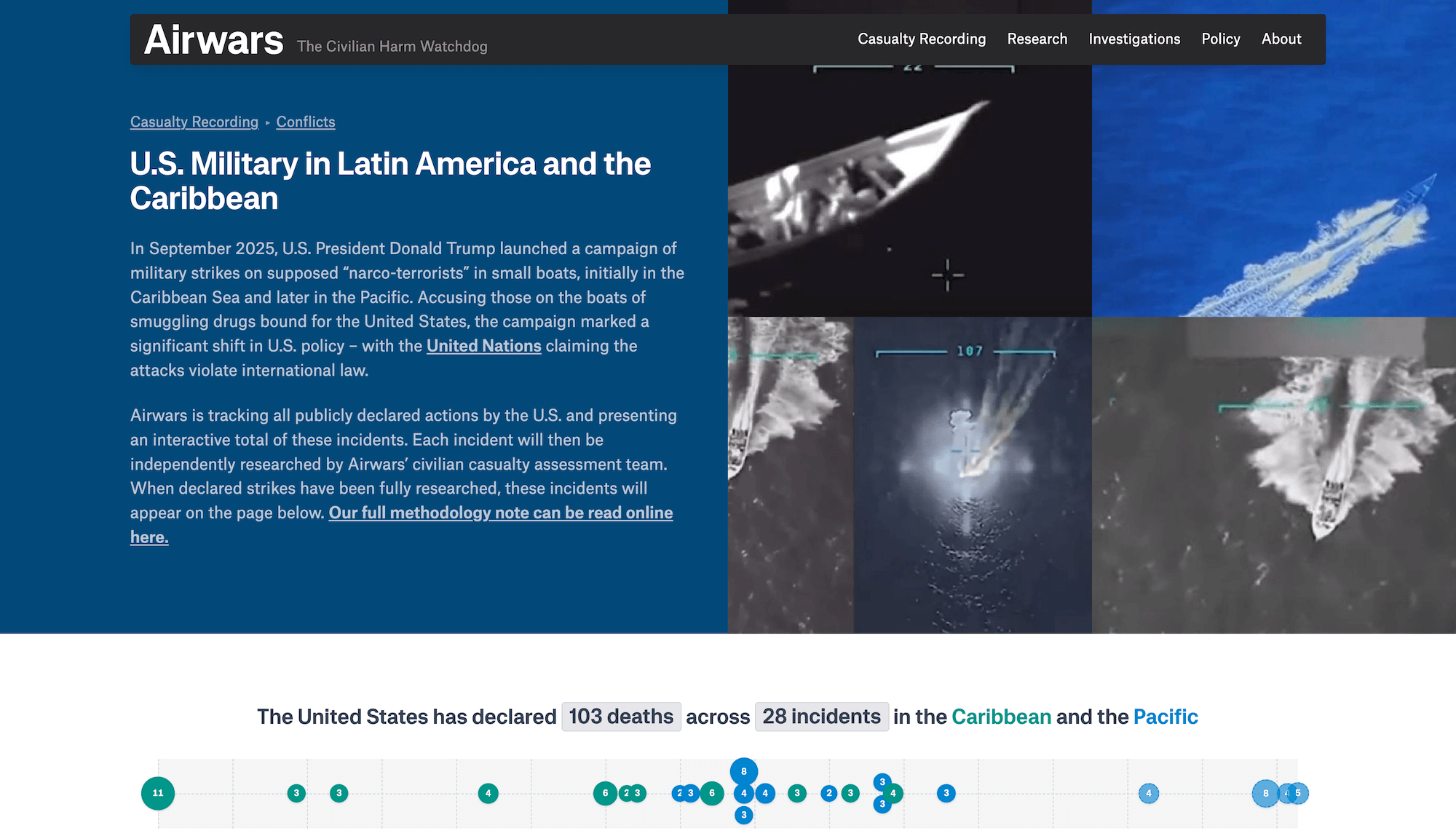
Within weeks of President Trump taking office, our specialist teams were documenting escalations in U.S. military actions in Yemen and Somalia. Later in 2025 we expanded our focus to U.S. military strikes on so-called “narco-terrorists” in the Caribbean and Pacific.
In Yemen, our teams navigated an information war led by the Houthis, who launched a campaign days after the first U.S. strikes, threatening those who reported on strike details and locations. Knowing the risks, civilians nevertheless went to extreme lengths to show the world what was happening around them - as happens in conflicts the world over. By the time the U.S. ended the campaign, our casualty recording teams had preserved hundreds of sources and published more than 30 incidents of civilian harm. These featured in a major Human Rights Watch report alleging one of the strikes was a war crime, and our analysis was used across international media.
In Somalia, we monitored the substantial increase in U.S. airstrikes, with more strikes already declared this year than under the entire term of any other U.S. President. Given the particularly complex information environment, our Somali team have spent months forensically analysing sources to understand who is being killed in this campaign and where the strikes are taking place.
This year our teams expanded for the first time into Persian, working with human rights experts on Iran to build a rapid response team to capture and preserve allegations while Israel and Iran exchanged fire in a short but deadly campaign. Working in Hebrew and English to capture the human toll in Israel, we will be releasing this new archive of civilian harm in early 2026. In the meantime, we have been supporting partners and accountability efforts with expedited versions of our findings, to ensure that information on those who lost their lives can be used to maximum effect. For instance, we worked with Al Jazeera Fault Lines on a documentary highlighting the civilian toll of Israeli strikes on Evin Prison.
New partnerships in changing contexts
After dictator Bashar Al-Assad’s regime fell in Syria at the end of 2024, we were finally able to close a deadly chapter of documentation, publishing what we hope will be the last record of civilians killed by Russian airstrikes in the country. Opportunities for Syrian civil society have transformed over the last year with a new government in place and our teams are working proactively to support locally-driven approaches to justice and reconciliation as part of a new future. This included sharing information with the White Helmets as they released a detailed overview of double-tap attacks involving first responders over the last decade, and establishing a new Memorandum of Understanding with the Syrian Network for Human Rights to share information and reconcile our respective documentation efforts.
see documentation
Investigations
In-depth storytelling to humanise warfare
The last year has seen significant shifts in the landscape of accountability reporting, with newsrooms around the world grappling with the dual challenge of those in power acting with an unprecedented level of impunity, and record levels of disengagement with traditional news media.
Taking lessons from journalists across the globe working through crises, and in particular through periods of authoritarianism, we have pursued mission-driven reporting that sees truth telling as the backbone of defence and a critical tool for civic empowerment.
With President Trump as the self-described ‘President of Peace’, we have not shied away from exposing the reality and consequences of military interventions under the new administration. Our data-driven reporting on Yemen laid bare the significant scale of civilian harm in the short campaign, compared to decades of Airwars’ documentation of U.S. intervention there. Combining a review of historic records with witness testimonies and extensive comparative analysis, we produced investigations on the Yemen campaign that shaped public understanding of the war and aided behind-the-scenes policy advocacy.
We have continued to innovate our methods to engage new audiences, producing our first ever short films in-house. One 20-minute investigation revealed where and how 400 civilians were killed by the Israeli military in just 17 self-proclaimed ‘precision’ strikes in October 2023. A second used 3D modelling to recreate the infamous U.S.-backed Gaza Humanitarian Foundation militarised aid sites, which the United Nations said led to the deaths of more than 1,000 aid-seekers.
We felt acutely aware of the need to bring people’s lived experiences and stories to open source investigations. Over the last few years we have seen major investment in open source investigative teams, with most international newsrooms establishing dedicated visual and open source units. As an organisation that has worked with open source techniques as a primary methodology for the last decade, we also know the limitations in this field when it comes to covering the human heart of a given story. This year we tried to marry these two worlds with a five-minute film about displacement and return. The voices of three Palestinians steered viewers through a road matched frame by frame through open source techniques before and after the January ceasefire was declared. We will look to build on these efforts in the year ahead.
Acknowledging the long-term power of investigations beyond publication, our teams worked hard to directly deliver our findings to those that needed to hear them the most. From behind the scenes briefings for policy teams working on civilian protection and diplomatic engagement across the UK, U.S. and Europe, to wider interaction with humanitarian actors and human rights advocates working in and on conflict contexts, we analysed and mapped out intended audiences and found ways to reach key actors and partners. This included a major drive to present our work to wider communities of journalists, with our team speaking at events at the Frontline Club in London, at Berlin-based Tactical Tech, at the Logan Symposium in California and at the Global Investigative Journalism Conference in Malaysia.
And finally this year we piloted a new partnership with Stanford’s Starling Lab for Data Integrity, to embed new technologies on digital preservation within our investigative process. In a cross-border partnership with Russian investigative journalists at iStories, Airwars produced a complex investigation into one of the new digital frontiers of the Russia-Ukraine war, while also preserving 9,000 URLs with cutting-edge archival techniques through Starling Lab. We will look to build on these lessons over the next year as we consider how to balance the practices and processes of journalism with increasing reliance on and engagement with our findings by legal accountability mechanisms.
The Killings They Tweeted
Debunking the myth of ‘precision’ warfare has been a focus for our investigative teams for many years. From our early documentation efforts on Obama’s drone campaign in Yemen, to our investigations revealing the hidden civilian toll of the British war against ISIS, the consistent denial by militaries of the civilian toll from their actions is a predictable feature of modern warfare.
The Israeli military was no different. Within weeks of its devastating campaign on Gaza in October 2023, official social media accounts had pushed hundreds of clips of grainy strike footage it claimed were demonstrating a highly precise campaign. Taking these black and white airstrike videos as the starting point, our team painstakingly geolocated dozens of videos. Through open source investigation and interviews with witnesses and survivors, we were able to link 400 civilian deaths to just 17 strikes.
The film was part of the package that won the prestigious Kim Wall award for digital innovation at the Overseas Press Club for America, making Airwars the smallest organisation represented at the awards ceremony. The judges stated that the work "stood out for the innovation Airwars brought to the field of digital storytelling on international affairs, honing in on the most urgent and competitive storyline of the year with tangible impact.” It was also cited in South Africa’s case against Israel at the International Court of Justice as evidence of a systematic pattern of attacks on civilian populations.
watch the film
Policy
Informing immediate action and future change
This year our team took on a substantively different approach to meet the unpredictability and complexity of today’s policy landscape. Building on years of quiet engagement and behind-the-scenes advocacy, we launched a bold public facing initiative: the Civilian Protection Monitor.
This new platform is a truly collaborative effort, launched in partnership with Dutch-based peace organisation PAX, with support from UK-based transparency organisation Unredacted, and based on an analytical framework designed by our U.S.-based partners at the Center for Civilians in Conflict. Our findings were workshopped directly with state representatives across ministries of defense, and peer reviewed by leading experts in our sector, with a launch event attended by dozens of officials and civil society representatives. This has provided both a clear roadmap for engagement with states, and a practical mechanism to maximise impact at a time of resource scarcity.
Looking ahead, the platform will be a crucial marker for the progress achieved in the U.S. over the last decade of engagement, which is now under threat as the new administration pulls back from commitments and displays little regard for international norms and obligations.
Over the last year, in part driven by increasing urgency from these challenges, we pushed harder with our policy recommendations to strengthen and clarify our role as we engage with states and advocate for better protection of civilians. This included building a dedicated page on our new-look website to showcase our policy portfolio, providing expert analysis on partner platforms, and contributing to leading publications in our field.
Ensuring we work with a wide community to co-design recommendations with key audiences, our team has presented at conferences organised by the United Nations, the International Committee of the Red Cross, NGOs, and also hosted multiple workshops with civil society and military officials. We continue to play a leading role in the movement to protect civilians from the use of explosive weapons in populated areas, with our policy expert presenting at the invitation of states such as Austria, Costa Rica and Norway in a series of implementation conferences. This exposure and level of engagement is proof of concept for our balanced approach of trust-building informed by the presentation of reliable primary evidence, now combined with a renewed effort to galvanise wider understanding and attention on this critical issue.
Transformative progress in the Netherlands
Our work with the Netherlands yielded particularly strong results this year, with the Dutch Ministry of Defence (MoD) demonstrating impressive commitment to transparency and accountability after years of dedicated engagement with Airwars and a group of NGOs. A major breakthrough was seen with the launch of a new reporting mechanism for civilians and third party actors to submit evidence of harm potentially caused by Dutch military action - opening up vital new avenues for civilian victims to receive support.
In summer 2025, we assumed leadership of the ‘Roadmap process’ as we transition into a new phase of work with the Dutch MoD. This builds on a closed-door process over the last year where Airwars referred dozens of potential cases of civilian harm from Dutch actions in the war against ISIS to test and inform the MoD’s own casualty assessment processes, picking up on crucial recommendations for improvement released by a major inquiry into a Dutch strike in Iraq that killed more than 80 civilians.
Munitions Literacy
New initiative: Towards a universal knowledge base for conflict documentation
An understanding of the nature, impact and effects of today's munitions is essential - whether for a reporter at The New York Times, a civilian returning to their neighbourhood after a ceasefire, an international lawyer seeking prosecution, or a novice open source enthusiast.
This 'munitions literacy' can help counter wartime mis- and disinformation, document new and emerging technologies on the battlefield, and support investigations into the wider drivers of conflict. Yet to date, this expertise has been held by a small community of experts with little transfer throughout civil society or policy networks.
In 2024, Airwars and munitions experts from the Armament Research Services fully launched the Open Source Munitions Portal, a free tool aimed at democratising this knowledge and equipping a wide ecosystem of civil society actors, journalists, lawyers and human rights researchers with munitions literacy. To date we have added more than 1,300 verified and searchable munition images from conflicts across the globe, produced powerful interactive visual explainers and adapted to new conflicts with specific collection pages.
Our impact
Over the last year we scaled the project with vital support from the European Media and Information Fund, expanding to new conflicts and munition types, with a strategic focus on:
- Providing critical interventions to curb the spread of mis- and disinformation: The team fact checked dozens of false munitions-related claims spreading widely online, including false allegations of chemical weapons use by Ukrainian forces, and incorrect claims shared by AI chatbot Grok X/Twitter on munitions use in Gaza.
- Establishing collaborations with partners: Including Bellingcat, Human Rights Watch, Myanmar Witness, and Yemeni organisation Mwatana. The OSMP features images from these organisations' extensive archives, while linking back to the original source - making decades of conflict documentation more accessible. At a time of acute resource pressure across our sector, this has strengthened and amplified the work of colleagues across a crucial ecosystem of investigators.
- Training hundreds of human rights lawyers, criminal investigators, journalists and policy advocates. From leading talks to open source investigators in Bellingcat's Discord community, to policy advocates at the Emerging Experts group at the Forum for the Arms Trade, the munitions portal has become a powerful cross-disciplinary platform to help develop the investigators of tomorrow.
- Supporting documentation of fast-moving conflicts. The portal supported dozens of successful investigations by journalists, researchers, academics and others. This included an AP investigation into the ‘double-tap’ attack on Gaza’s Nasser hospital, a Sky News deep-dive into Russia's use of the Shahed 'suicide drone', a significant investigation identifying Denmark-linked munition remnants in Gaza, and an Al Jazeera Fault Lines documentary investigating Israeli attacks in Lebanon. The team also provided confidential analysis and contextual understanding around specific incidents.
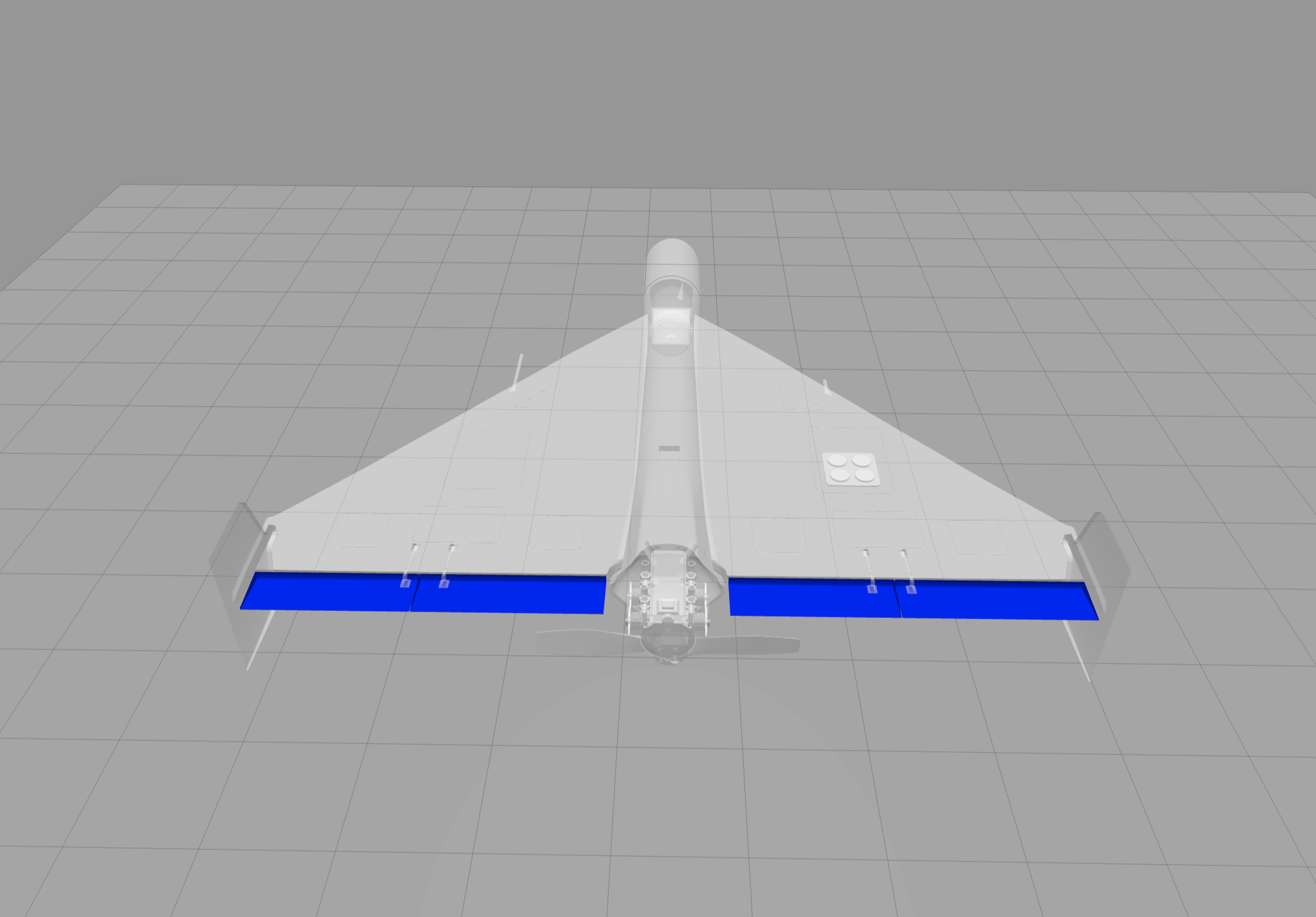
Shahed 136 3D model analysis tool
Open Source Munitions Portal
Taking literacy further
This year we produced a number of new features to make the munitions portal more accessible to those from the conflicts we document. This includes a new search function where translations and colloquial terms for common munitions written in local scripts can be used to navigate the archive.
In partnership with Bomb Techs Without Borders - Ukraine, we have also begun to translate key parts of the website into Ukrainian. This began with an interactive explainer of the Shahed 'suicide drone' in Ukrainian, one of the key weapons used by Russian forces to target civilian populations deep in Ukrainian territory. In 2026, we hope to extend this project extensively, making vital information available to Ukrainian and other non-English speaking audiences.
visit platform
Sector Strength
Innovating to build resilience
Airwars has always sat at the intersection of public interest journalism, human rights, legal accountability mechanisms, humanitarian action and international policy. Today, each of these fields are facing unprecedented existential challenges - in part due to scything global funding cuts, and in part as the traditional pathways for accountability and justice are not up to task for those who need them most.
Our role supporting colleagues and strengthening connections across an increasingly fragile ecosystem remained a central pillar of our approach this year, at a time when it has never felt more urgent. Our effort to contribute to a more responsive resilience has informed developments across all areas of our work, including:
- Strategic alliances to amplify community needs, through establishing targeted partnerships to strengthen the evidence-to-impact pipeline for civilians in need. This included playing a key role in the newly launched Marla Project, an initiative housed at the Center for Civilians in Conflict, which provides civilians harmed by U.S. actions with individual advocates in an effort to secure acknowledgement and, where possible, compensation. This also involved working closely with British doctors and nurses travelling in and out of Gaza to provide guidance and support for reporting incidents of civilian harm, with a particular focus on hospitals under siege. In a workshop coordinated with an NGO specialising on digital security, Airwars helped set up an informal community of practice to support medics with rare access in Gaza to navigate demands from both media and accountability mechanisms.
- Sharing new tools to increase access to our resources to promote broadest use. From launching our codebooks publicly on GitHub, to developing tools to help navigate complex datasets relating to fatalities in Gaza, to our major projects the Civilian Protection Monitor and the Open Source Munitions Portal - we looked for new ways to share our tools and resources to support colleagues across a wider ecosystem.
- Developing partnerships for a future generation of leaders through a new stream of work with university labs and clinics around the world. This includes a major partnership with the multi-disciplinary Global Rights Innovation Lab Clinic at the University of California, Berkeley, with students working across law and data science on our civilian harm archives to study our methodology and help us advance the application of our documentation for legal and accountability purposes. This year we worked in partnership with Utrecht University’s Global Justice Investigations Lab, and with Utrecht University’s public law clinic. Here we worked with students on practical investigative toolkits, and initiated in-depth legal analysis of the patterns we have identified from our Gaza documentation efforts. In September 2025, we launched a project with Queen's University Belfast in which students are supporting geolocation efforts for our historic archive of attacks by Russian forces in Syria.
- Critically engaging with new technologies to support the wider field of casualty recording as part of a new project with King's University London. We initiated a multi-year programme where information specialists embed within our documentation teams to identify opportunities and risks of incorporating machine learning and different forms of Artificial Intelligence into our open source civilian harm investigations. Lessons learned from this process will serve the wider field of casualty recording, with Airwars now a member of the new Scientific Technical Advisory Committee for the Casualty Recorders Network. The results will inform our work with academics through the University of Newcastle, where we are seeking new ways to capture more specific details around injury types for those harmed by explosive weapons.
New website
Making all our work more accessible
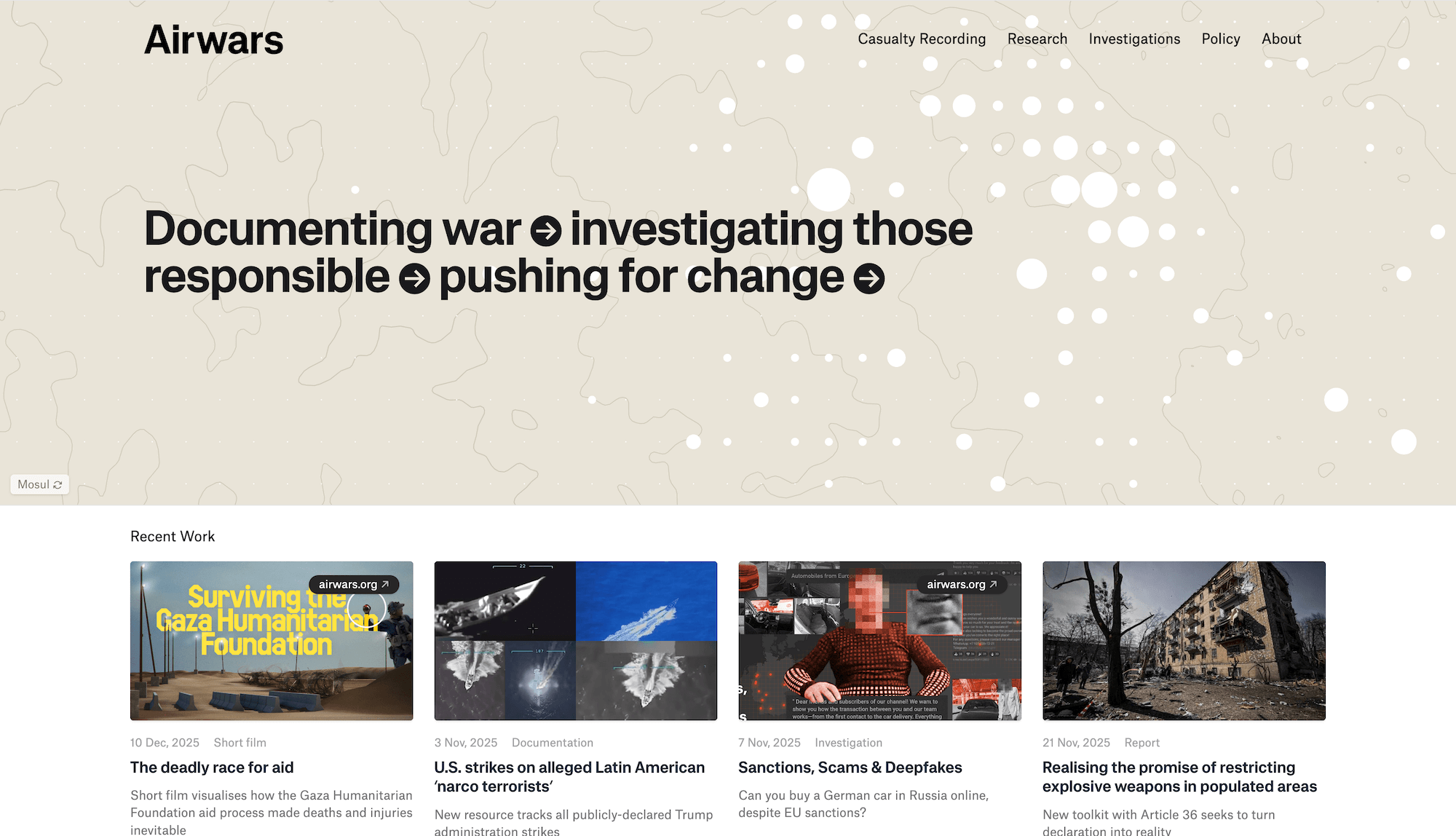
To ensure our work is useful in different contexts and partnerships amidst changing needs, this year we underwent a major overhaul of our website. The new site reflects the openness and transparency that we demand of others and provides much deeper access and analysis across all our research.
We added new ways to segment and understand more than a decade of research including introducing a new patterns tab in our Gaza civilian harm archive - allowing users to navigate through hundreds of published incidents using trends observed by our researchers. Drawing attention both to the scale of harm and the granular detail of human loss is a major challenge but can be crucial for accountability at many levels: the first day Israel broke the first ceasefire in March 2025, we recorded what may turn out to be the bloodiest day of the war - nearly a hundred incidents of civilian harm within 24 hours.
Further innovations include citation pages, where we highlight different ways in which our documentation has led to change - including legal proceedings, shaping media understanding of conflict and working with international governments to implement policies that lead to civilian harm.
new site
Lookahead
Changing methods with continued focus
Achieving change for the people who need it the most will require different approaches from ten or even two years ago. It will involve radically rethinking the disjointed, short-term collaborations across our sector that have often failed to unlock agency for those most affected by unchecked power. In the year ahead we will critically interrogate why and how this flawed model has prevailed, in order to identify and build more resilient pathways for the future.
Our priorities include:
Sector strength and capacity
- Opening up our toolkits and investing in new training and knowledge-sharing opportunities to aid an increasingly diverse community of conflict researchers, human rights defenders, war correspondents and advocates. This will cut across the fields of digital archiving, munitions analysis, and policy change.
- Shifting gear in strategic alliances to influence accountability outcomes now and strengthen long-term effectiveness. This will see us taking the leadership in consortium efforts, and pushing forward our public facing work across all sectors.
Systematic research
- Extending our capacity to remain 'response-ready' as new conflict contexts emerge. We will invest in rapid-response capabilities to build scenario-based workshops with our partners to better prepare for future conflicts and we will further open up our archives to ensure our findings are accessible to citizens and all those working across justice, accountability and peace-building. This will see us continually improve access and valuable analysis via our new website, as well as further developing our subsites the Open Source Munitions Portal and the Civilian Protection Monitor.
Technical innovation
- Diversifying our media partnerships to platform experiences of civilians in conflict, pushing a collaborative approach to connect local journalists with international news outlets. With a major new grant from the Adessium Foundation to support this initiative, we will bring on dedicated experts to push forward collaborative partnerships across all areas of work.
- Investigating advances at the cutting edge of modern conflict to explore the future of warfare, with a new team now in place to expose how the push towards fully autonomous weapons may bring fresh threats for civilians.
Targeted advocacy
- Leveraging our access with a diverse network of high level actors to push for changes to the policies and norms that are currently failing to protect civilians. This will take us into efforts to engage with new states as we seek to widen our policy portfolio, particularly in the face of backsliding on commitments in the United States.
- Positioning ourselves for the future by taking lessons from today’s threat landscape into modelling for tomorrow’s conflicts. This includes working with new partners across the Pacific with a focus on civilian harm in maritime environments, and engaging more proactively with ‘eastern flank’ states that border Ukraine and Russia to understand concerns and profiles for states preparing new civil defense capabilities.
As ever, Airwars remains committed to a future in which civilians are protected, and dialogue about human suffering is not politicised. The road ahead is challenging, but our resolve is unwavering. Every incident we document, every pattern we identify, and every story we preserve contributes to a new set of norms where civilian harm is understood as neither inevitable nor acceptable.
Finances
In compliance with our status as a registered non-profit company limited by guarantee in the United Kingdom, Airwars’ financial reporting can be found filed on Companies House.
Airwars is deemed to be the equivalent of a U.S. charity, with 501(c)(3) status. Our Foreign Public Charity Equivalence Determination (ED) certificate is available via NGOsource.org
In this financial year, our total income was approximately 820k GBP. The majority of our resources have been invested in our casualty recording unit, with thanks to private donors who enabled us to scale quickly on our new Iran documentation effort. Much of the investment in our casualty recording team also came from a generous grant from the Swedish Postcode Lottery. Our investigations team expanded significantly this year with thanks also to a major new donor, who allowed us to bring on new experts in new technologies of warfare.
You can read about our team and also find the names of all those who generously give their time voluntarily to Airwars on our team page.
Breakdown of expenditure
With Thanks
Major shocks to the funding landscape have created an even more difficult environment for everyone working on humanitarian, pro-democracy, social justice and progressive causes. A significant increase in threats to respond to has come simultaneously with a significant decrease in support. We all know there will be tough times and decisions ahead too.
We are therefore especially grateful to all our supporters who have shown up consistently and trustingly with funding, connections, energy and friendship this last year. We remain one of the few organisations committed to holding militaries to account, at a time when defense spending is on the rise across Europe, the United States has expanded its military operations to new frontiers, and the regions in which we operate are among the most deadly for journalists in history.
We welcomed new donors over the last year into our community of supporters, including the Rockefeller Brothers Fund, the Swedish Postcode Lottery, the European Media and Information Fund, and the Fred Foundation. These new relationships have allowed us to deliver better outcomes for those we seek to support, pushed for progress and raised the profile of our approach in new spaces. At the same time, we’ve maintained investments in our core mission from longstanding donors including the Joseph Rowntree Charitable Trust, the Reva and Logan Foundation, Wellspring Philanthropic Fund, the Joffe Trust, and Open Society Foundation, while reconnecting with early Airwars supporters at J Leon.
With huge thanks also to a growing community of individual donors, whose support was particularly noticeable during a period where the nature of specific conflicts has meant we’ve had to make some of the most significant and exposing decisions in our organisation’s history, and make them very quickly.